Why Your Thumbnail Chips Faster Than Every Other Nail (and How to Slow It Down)
Quick Answer: The thumbnail chips first because it’s used in more high-friction grip tasks (phone scrolling, zippers, keys, texting) than any other finger, and it has the largest, flattest nail surface, giving impacts more area to catch an edge. Extra top coat and a slightly rounded free edge on the thumb specifically address both causes.
If you’ve noticed your thumb polish always goes first, you’re not imagining it — of all ten nails, the thumb takes the most mechanical abuse in an average day.

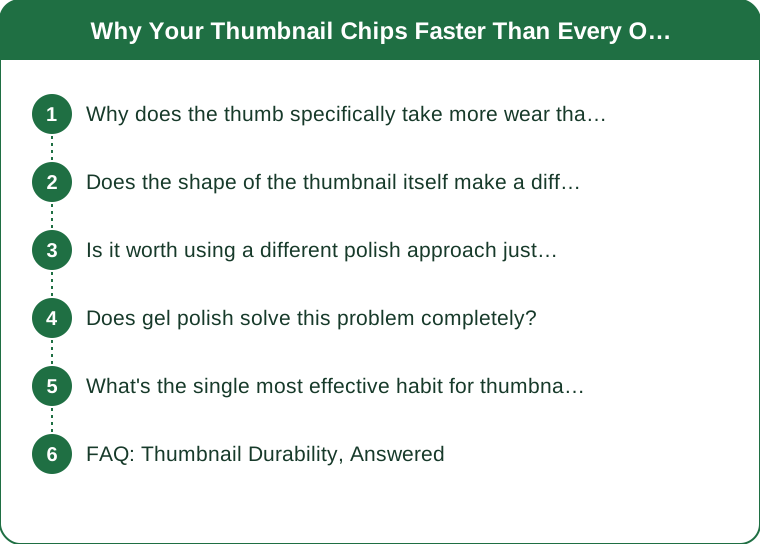
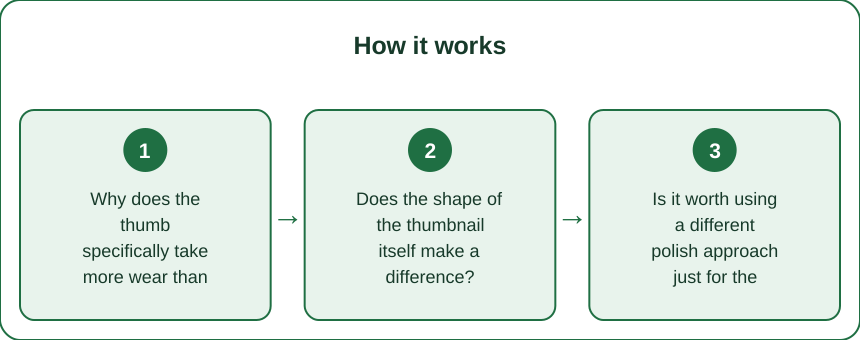
Why does the thumb specifically take more wear than other fingers?
The thumb is involved in nearly every gripping and pressing motion — opening jars, using a phone, typing, zipping a jacket — far more than any single other finger, which individually handle a narrower range of motions. This cumulative friction and impact difference is the single biggest reason thumbnail polish and gel wear faster.
Does the shape of the thumbnail itself make a difference?
Yes — thumbnails tend to have the largest, flattest surface area of any nail, which means a chip or impact has more edge to catch on compared to the narrower nails on other fingers. A slightly more rounded free edge shape on the thumb (versus a sharper square edge) reduces how easily an impact catches and starts a chip.
Is it worth using a different polish approach just for the thumb?
Many nail techs specifically recommend it — adding one extra thin layer of top coat on the thumbnail only, reapplied every 2-3 days between full manicures, meaningfully extends how long thumb polish holds without needing to redo the whole set. It’s a small, targeted fix rather than changing your whole routine.

Does gel polish solve this problem completely?
It helps significantly but doesn’t eliminate it — gel is more chip-resistant than regular polish generally, but the thumb’s higher friction exposure means it will still typically show wear before other gel nails do, just on a longer timeline (chipping around week 2-3 instead of day 2-3 for regular polish).
What’s the single most effective habit for thumbnail durability?
Consciously using the pad of the thumb instead of the nail edge for tasks like opening cans or scratching labels is the habit nail techs cite most — most thumbnail damage comes from using the nail itself as a tool, which is a habitual, fixable behavior rather than an unavoidable cause.
FAQ: Thumbnail Durability, Answered
Is it normal for only the thumb to need touch-ups between manicures?
Yes, this is extremely common and doesn’t indicate anything wrong with your manicure technique or products.
Does nail shape (square vs. round vs. almond) matter beyond the thumb?
A more rounded edge is generally more chip-resistant on any finger, since sharp corners are the most common catch point for impacts.
Should you file the thumbnail shorter than other nails to reduce chipping?
A slightly shorter length can help reduce leverage-based chipping, but matching length isn’t necessary if you’re maintaining a rounded edge and using extra top coat.
TL;DR:
- The thumb handles more gripping and pressing tasks than any other finger daily
- Its larger, flatter nail surface gives impacts more area to catch and start a chip
- An extra top coat layer and slightly rounded edge on the thumb specifically extend its wear
- Using the nail pad instead of the nail edge as a tool is the single most preventable cause
Your thumbnail isn’t behaving worse than the rest — it’s just working harder. Treat it like the high-traffic nail it is.
Keep Reading
This article is for general informational and styling purposes only. Fit, sizing, and product availability may vary.