Why Your Gel Manicure Always Lifts at the Same Spot First
Quick Answer: Gel polish that consistently lifts at the same spot — usually the cuticle edge or a specific nail like the thumb — is almost always a prep or application issue at that exact location, most commonly leftover oil or moisture on the nail plate or polish applied too close to or touching the cuticle, not random wear-and-tear.
Every manicure, same story: the polish holds fine everywhere except that one spot near your cuticle on your thumb. That repeatability is actually useful information — it means the cause is specific and fixable, not just bad luck with a particular batch of polish.

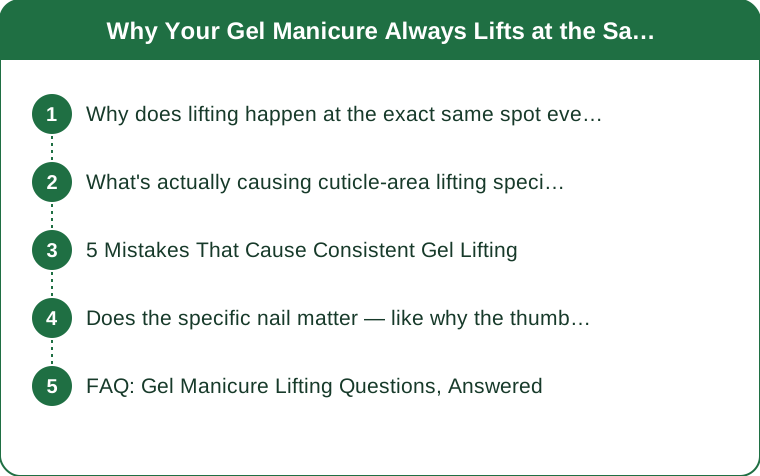
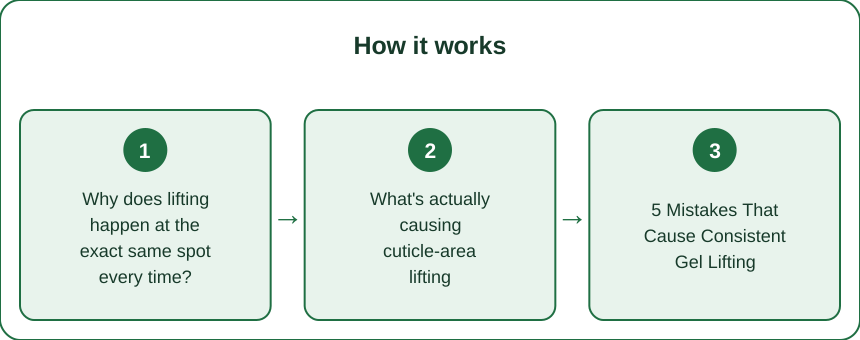
Why does lifting happen at the exact same spot every time?
Gel polish adheres through a chemical bond to the nail plate, and that bond fails specifically wherever the surface prep was incomplete or the application technique was inconsistent at that spot. The cuticle area is the most common repeat offender because it’s the hardest area to clean and apply evenly — natural oils concentrate there, and it’s easy to either leave a polish gap or accidentally get polish on the skin, both of which create a weak point.
What’s actually causing cuticle-area lifting specifically?
Two common culprits: leftover cuticle oil or moisture on the nail plate right at the base (even a small amount blocks proper adhesion), and polish applied too close to or touching the skin, which creates a seal that traps moisture and lifts as the skin naturally moves and sheds. Pushing back cuticles thoroughly and cleaning the nail plate with alcohol immediately before applying gel addresses the first cause directly.

5 Mistakes That Cause Consistent Gel Lifting
1. Not cleaning the nail plate with alcohol right before the base coat — oils from skin and cuticle products block adhesion. 2. Applying polish that touches the skin — creates a weak seal point that lifts as skin sheds naturally. 3. Curing each layer for less time than recommended — under-cured gel doesn’t fully harden and bonds poorly. 4. Filing or buffing unevenly, leaving a shiny patch — gel doesn’t adhere well to an overly smooth, glossy nail surface; a light matte buff helps grip. 5. Not capping the free edge — sealing the tip of the nail with each layer prevents water from getting under the polish at the edge, a common lifting starting point.
Does the specific nail matter — like why the thumb lifts more than others?
Yes — thumbs and index fingers experience more friction and contact with surfaces throughout the day (typing, texting, opening things), which puts more mechanical stress on the polish-to-nail bond at exactly the edges where adhesion may already be marginal. This is why the same finger often lifts first even with otherwise identical application across all ten nails.
FAQ: Gel Manicure Lifting Questions, Answered
Does gel brand quality matter for lifting?
Somewhat, but application and prep technique usually matter more — even premium gel polish lifts if the nail plate isn’t properly cleaned and prepped first.
Can you fix a lifting spot without redoing the whole manicure?
A small lifted area can sometimes be carefully filled and re-cured, but if lifting is spreading, a full removal and reapplication is usually more durable long-term.
How long should a properly applied gel manicure last before any lifting?
A well-prepped, well-applied gel manicure commonly lasts 2-3 weeks without lifting; earlier lifting at a consistent spot points to a fixable application issue.
TL;DR:
- Lifting at the same spot every time points to a specific, fixable prep or application issue, not bad luck
- Clean the nail plate with alcohol right before applying gel to remove oils
- Avoid letting polish touch the skin, and cap the free edge on every layer
- High-friction fingers like the thumb are more prone to lifting even with identical technique
Track exactly where your manicure lifts first — it’s telling you exactly which step in prep or application to fix.
Keep Reading
This article is for general informational and styling purposes only. Fit, sizing, and product availability may vary.