Why Your Ring Finger Nail Always Chips First
Quick Answer: The ring finger nail chips first for most people because it takes more incidental impact — bumping doorframes, typing, jewelry contact — while getting less protective use than the thumb or index finger, which are naturally shielded by grip habits.
If you’ve noticed the same nail failing manicure after manicure, that’s not random — it’s a specific, fixable pattern.
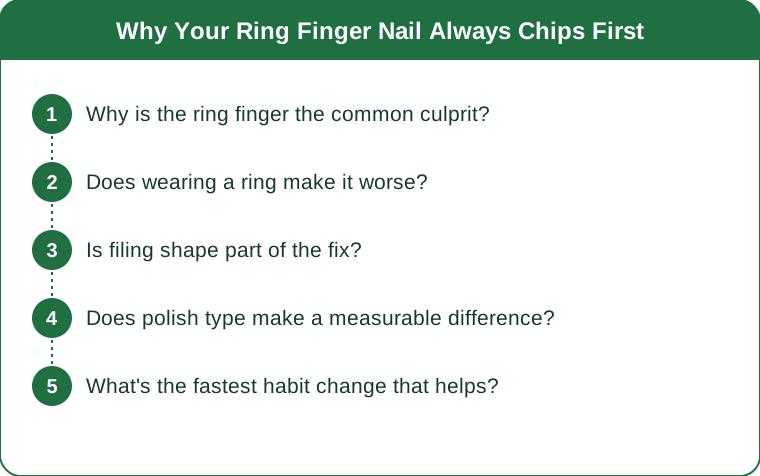
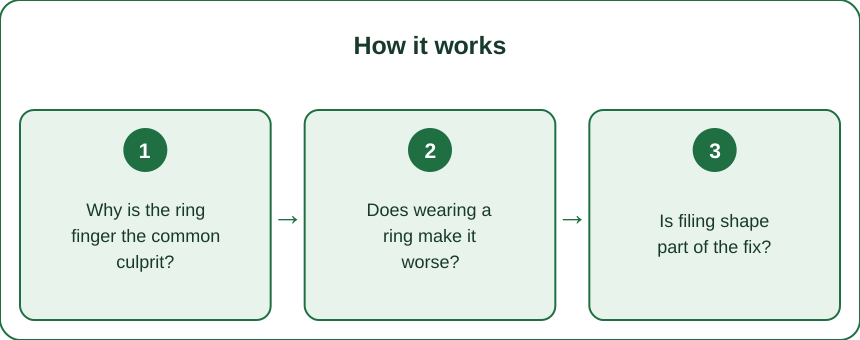
Why is the ring finger the common culprit?
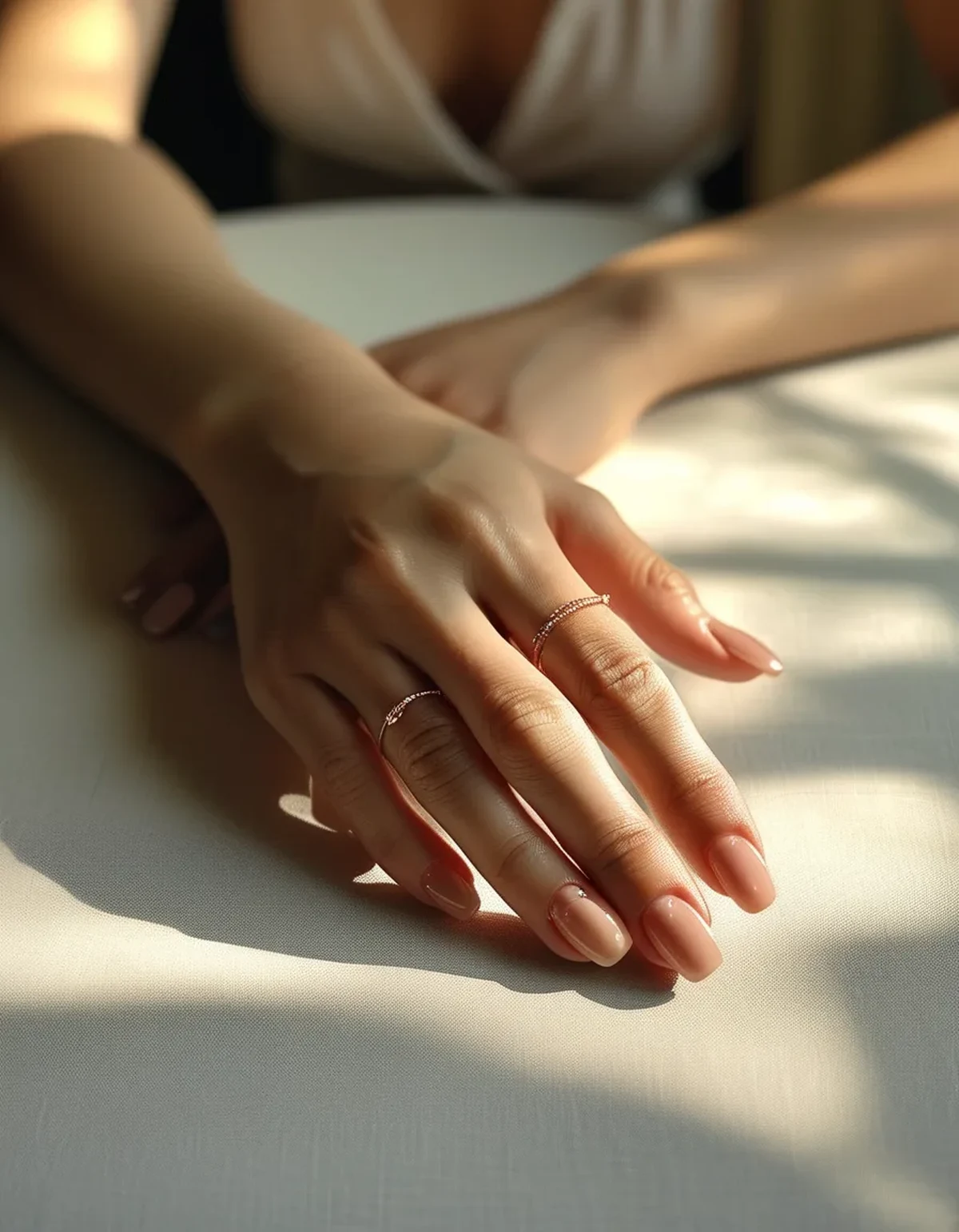
It sits between two fingers that get more protective positioning during grip and pinch movements, while the ring finger itself tends to trail slightly during reaching motions, catching edges the other fingers avoid. It’s positioned to take incidental hits that thumb and index fingers are naturally shielded from.
Does wearing a ring make it worse?
Yes, in a specific way — metal against nail during everyday tasks (typing, opening jars, adjusting bags) creates repeated micro-impacts right at the nail’s free edge, exactly where chips start. Removing rings before manual tasks, or choosing a slightly shorter length on that nail, reduces this directly.

Is filing shape part of the fix?
A squoval or rounded shape holds up better on a vulnerable nail than a sharp square edge, since square corners concentrate impact force into a single point that’s more likely to crack. Softening just that one nail’s corners slightly extends its life without changing the overall set noticeably.
Does polish type make a measurable difference?
A reinforced base coat under regular polish, or opting for gel specifically on the ring finger while using standard polish elsewhere, is a common workaround that protects the weak point without committing the whole hand to a full gel set.
What’s the fastest habit change that helps?
Simply noticing the moments that finger catches — typing, bag straps, car doors — for a few days surfaces the specific culprit fast, since it’s rarely the same trigger for everyone. Once identified, a small posture or grip adjustment usually solves it without any product change at all.
TL;DR:
- The ring finger takes more incidental impact while getting less protective grip use
- Rings themselves create repeated micro-impacts right at the nail edge
- A softer, squoval shape on just that nail extends its chip resistance
- A reinforced base coat or spot-gel on that nail alone can solve it
Once you spot the specific trigger, protecting that one nail is usually a small, targeted fix.
Keep Reading
This article is for general informational and styling purposes only. Fit, sizing, and product availability may vary.